
How to Find Dallas County Arrest Records
Most recent arrests show up first in the county jail. The Dallas County Sheriff's Office runs the booking and jail systems, and the jail lookup is the fastest way to confirm a current arrest. For warrants and unpaid citation blocks, the county wanted search is the right tool. For the full case after charges are filed, use the courts portal.
Start with what you know, like a name or a book-in number. Then follow these steps:
- Open the Dallas County Jail Lookup to check current custody.
- Search by name, book-in number, or case number.
- Check the Dallas County Wanted system for warrants tied to the person.
- Open the Courts Portal to find the filed criminal case.
- For urgent confirmation, call jail information at (214) 761-9025.
The jail lookup confirms custody, but a filed case lives in the courts. For roster details, see the Dallas County inmate records page.
Dallas County Booking and Arrest Information
An arrest record begins at booking. When the Sheriff books a person into the Lew Sterrett Justice Center, the system records the name, a book-in number, the charges, and basic descriptors. The Sheriff's Office was established in 1846 and is the chief law enforcement agency in the county. It runs the seventh-largest jail in the United States, with an average population over 6,000 and more than 2,000 employees.
After booking, a person may post bond at the Lew Sterrett bond desk, which is open 24 hours a day, seven days a week. The fastest way to confirm a recent arrest is the jail lookup, since it reflects current custody. A person who has bonded out or been released may drop off the active roster quickly, so call jail information to confirm if the search comes back empty.
Misdemeanor cases that follow an arrest are handled by the County Clerk's criminal courts division. That office processes about 32,500 cases a year across eleven county criminal courts. The division page shows how those misdemeanor courts are organized.
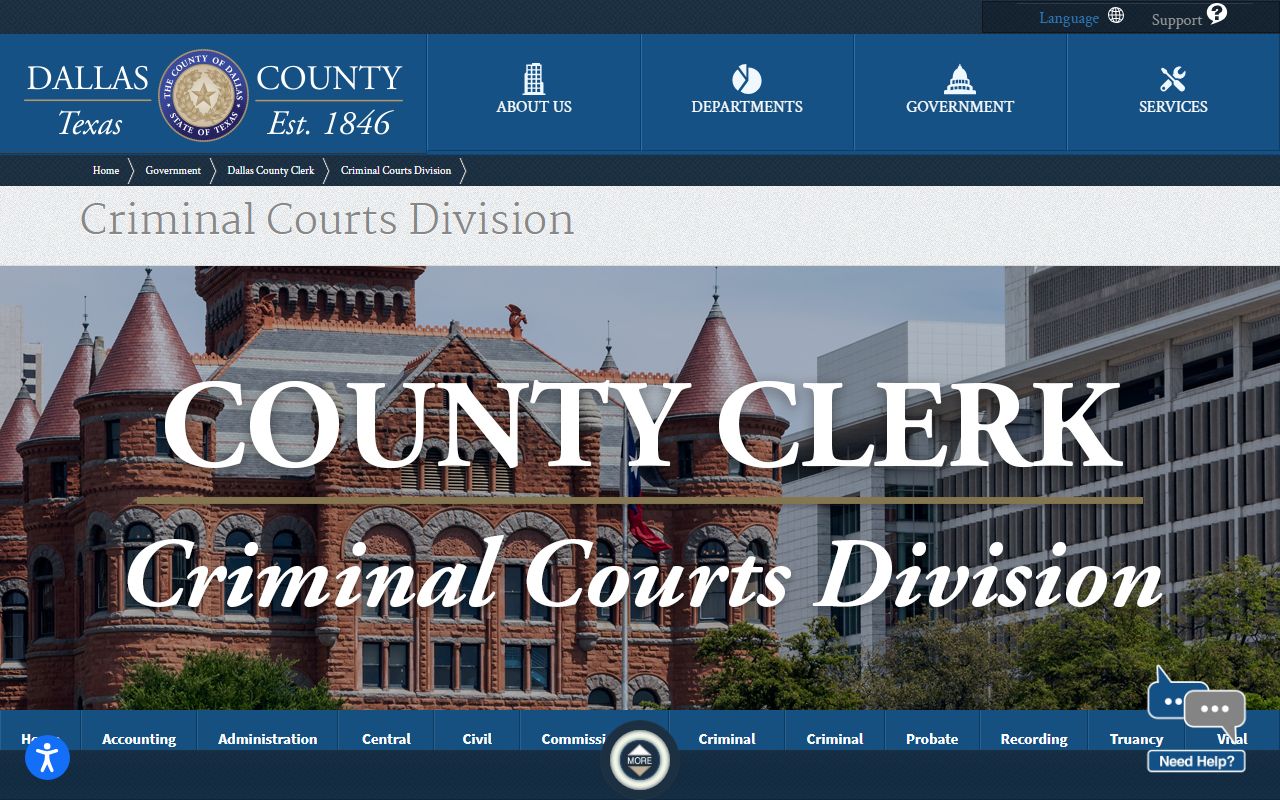
The County Clerk criminal courts division keeps Class A and Class B misdemeanor records that follow many arrests.
Arrest Record Versus Criminal Court Record
People often treat these as one thing. They are two records held by two different agencies. The comparison below sorts out which is which.
| Feature | Arrest Record | Criminal Court Record |
|---|---|---|
| Held by | Sheriff's Office / jail | District Clerk or County Clerk |
| Starts at | Booking | When charges are filed in court |
| Shows | Name, charges, book-in data | Plea, motions, disposition, sentence |
| Means | An accusation, not guilt | How the case was resolved |
For the court side, the Dallas County court records page covers full case history. The criminal courts FAQ explains common misdemeanor questions.
The criminal courts FAQ covers jail lookup, background searches, and nondisclosure filing.
Charges Versus Convictions
A charge is only an accusation. A conviction is a finding or plea of guilt. An arrest record can show charges that were later dropped, reduced, or dismissed. Reading a charge as a conviction is a common and costly mistake.
| Point | Charge | Conviction |
|---|---|---|
| What it is | An accusation at or after arrest | A guilty finding or plea |
| Where it shows | Arrest and booking records | The case disposition in court |
| Final? | No, the case can still change | Yes, unless appealed or set aside |
To confirm an outcome, check the disposition line in the court file, not the arrest entry.
Mugshots and the Arrest Blotter
A mugshot is the booking photo taken at intake. In Texas, booking photos and basic arrest data are generally public, though release can be limited for active investigations. The county wanted system shows photos for some listed people, along with a balance and warrant flags.
Be careful with placeholder data. The wanted Top 50 list sometimes shows unknown birth years and unknown race or sex codes. Treat any single source as a starting point, then confirm details with the court that holds the case. Private mugshot websites are not official and may be out of date, so this site does not link them.
To find recent arrests, the jail lookup is the most current view because it reflects who is in custody right now. The wanted search adds people with open warrants who may not be in jail yet. Neither tool is a full criminal history. For that, you need the filed court case and, for a statewide view, the DPS record.
Can I get a mugshot removed? The county does not remove official booking records on request. If an arrest leads to an acquittal, dismissal, or other eligible outcome, expunction or nondisclosure may limit the underlying record. Private sites set their own rules.
What Dallas County Arrest Records Show
Arrest and jail data pull from a set of booking fields. A jail or wanted result commonly shows the items below.
- Inmate or subject name.
- Book-in number and case number.
- Charges and offense descriptions.
- Race, sex, and date of birth descriptors.
- Warrant and scofflaw flags, plus any outstanding balance.
The jail lookup itself searches by prisoner information, book-in number, or case number. Criminal court files add identifiers like SO and FBI numbers. For warrant detail, see the Dallas County warrant records page.
Public Access and Restricted Arrest Records
Texas law leans open. The Texas Public Information Act, in Government Code Chapter 552, gives the public a right to government records. Arrest and jail data are largely public. Some material is held back, though. Government Code § 552.108 can protect information tied to an active investigation or prosecution.
Other limits protect people, not cases. Juvenile records are confidential under Texas Family Code Chapter 58. Records with a sexual assault victim's name are not posted online. If a record contains a Social Security number or other sensitive data, the county asks you to report it for redaction. You can read the Texas Public Information Act for the full framework.
Sealed Versus Expunged Arrest Records
Two tools can limit an arrest record in Texas, and they are not the same. Expunction removes eligible records. Nondisclosure seals them from most public view but does not destroy them. The comparison below shows the split.
| Feature | Expunction | Order of Nondisclosure |
|---|---|---|
| Governing law | Code of Criminal Procedure Chapter 55A | Government Code Chapter 411 |
| Effect | Eligible records are destroyed or removed | Records sealed from most public access |
| Common eligibility | Acquittal, pardon, certain dismissals | After deferred adjudication and waiting period |
| Who may still see it | Generally no one, with narrow exceptions | Law enforcement and some licensing agencies |
Dallas County's criminal FAQ says to file a completed nondisclosure petition with the clerk of the court where the case was filed and heard. You can read Chapter 55A and Chapter 411 for the rules.
County Clerk Divisions That Hold Related Records
The same County Clerk that keeps misdemeanor records also runs civil and probate divisions in the courthouse complex. If an arrest leads to more than one kind of case, you may deal with more than one division. The civil courts division handles county-level civil matters and lists its filing and hearing contacts.
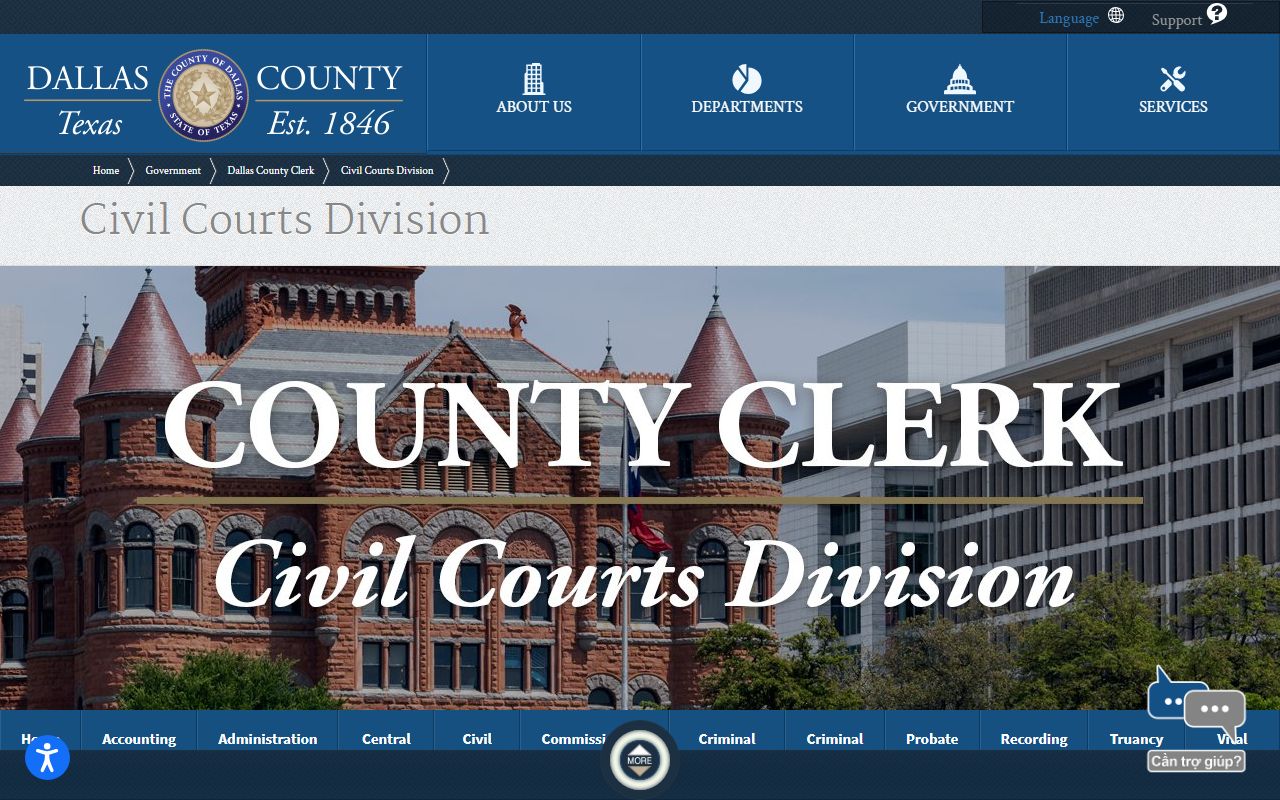
The civil courts contact page lists the county courts at law and filing help. The County Clerk also runs the probate division.
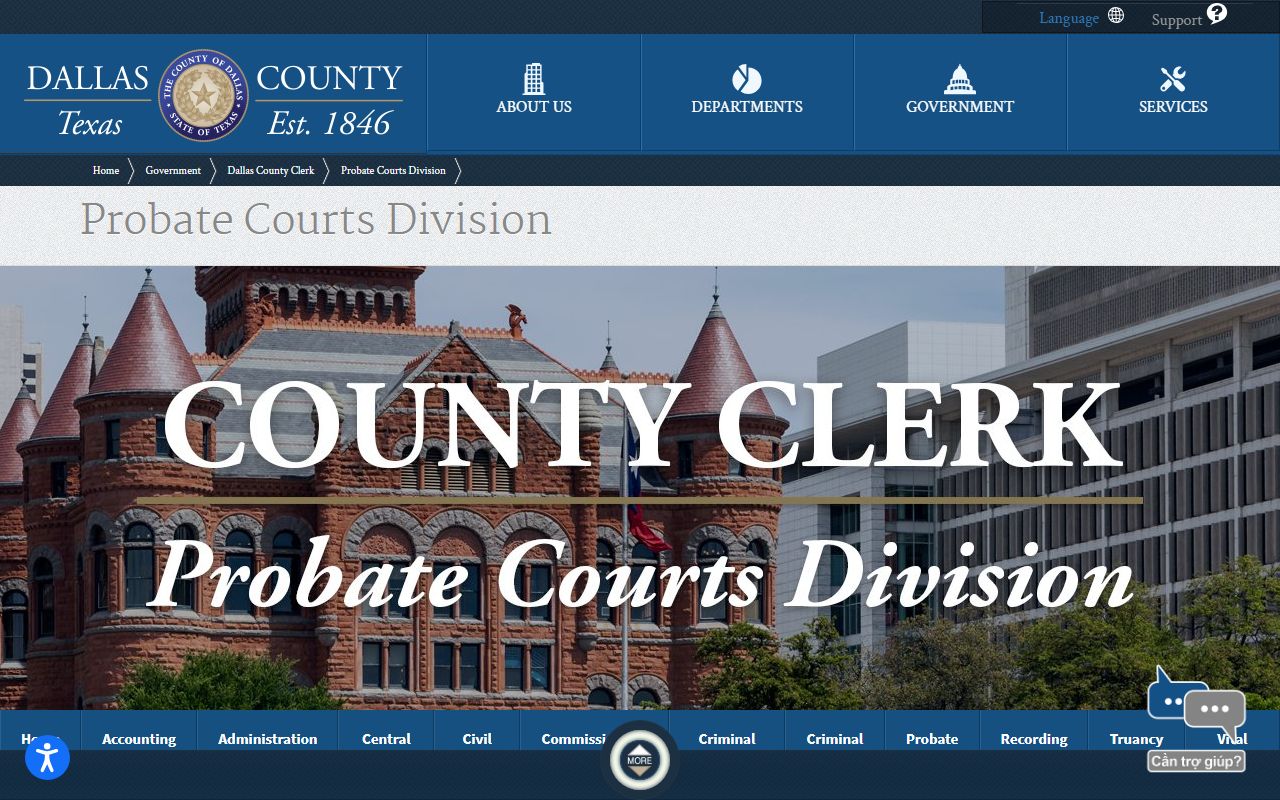
The probate division handles estates and guardianships. Its FAQ and fee pages round out the office.
The probate FAQ answers hearing and certified copy questions, and the fee page lists payment routes.
The probate fees and payments page shows how the clerk takes filing payments. For probate detail, see the probate records page.
State Criminal History and Background Checks
A statewide criminal history is held by the Texas Department of Public Safety, not the county. The County Clerk does run a misdemeanor background search for a $5 fee at the Frank Crowley building. For a full statewide picture, the DPS Crime Records service is the official source.
Background checks should rely on the disposition, not the arrest alone. A pending charge, a dismissal, and a conviction are very different outcomes, and only the court file confirms which one applies. The DPS criminal records service also handles expunction and nondisclosure on the state side, so an order entered in a Dallas County court eventually updates the statewide record.
The County Clerk's $5 misdemeanor search covers county misdemeanor cases only. It does not include felonies, police department tickets, or District Clerk felony matters. For felonies, search through the District Clerk or the courts portal. Mail requests for a misdemeanor search must include the full name, date of birth, and a cashier's check or money order payable to the Dallas County Clerk.
Note: Arrest data alone does not prove guilt, so confirm the case outcome in the court record before you act on what you find.