
How to Find Recently Released Dallas County Inmates
Dallas County does not publish a separate "released this week" list. The starting point is the jail lookup. If a person who was in custody no longer appears, that often means they were released or transferred. Records can lag and names can be spelled differently, so a missing result is a signal to verify, not a final answer.
- Search the Dallas County Jail Lookup by name or book-in number.
- If the person no longer shows, note the last known case or book-in number.
- Call jail or bond information at (214) 761-9025 to confirm a release.
- If the case ended in a prison sentence, check the state or federal locator.
- Set a VINELink alert so you are told of future custody changes.
For current custody detail, the Dallas County inmate records page covers the full roster.
Release can come for many reasons. A person may post bond, finish a sentence, win a dismissal, get a court-ordered release, or transfer to another agency. Each route leaves a different trail. A bond release shows at the county bond desk. A sentence to prison moves the trail to the state system. A federal case moves it to the Bureau of Prisons. So matching the release type to the right tool saves time and avoids dead ends.
Setting Up Release Notifications with VINELink
VINELink is a custody and notification service. You register a person of interest, and the system alerts you to custody changes in participating jurisdictions. It is a good fit for victims and families who need to know about a release without checking the roster every day.
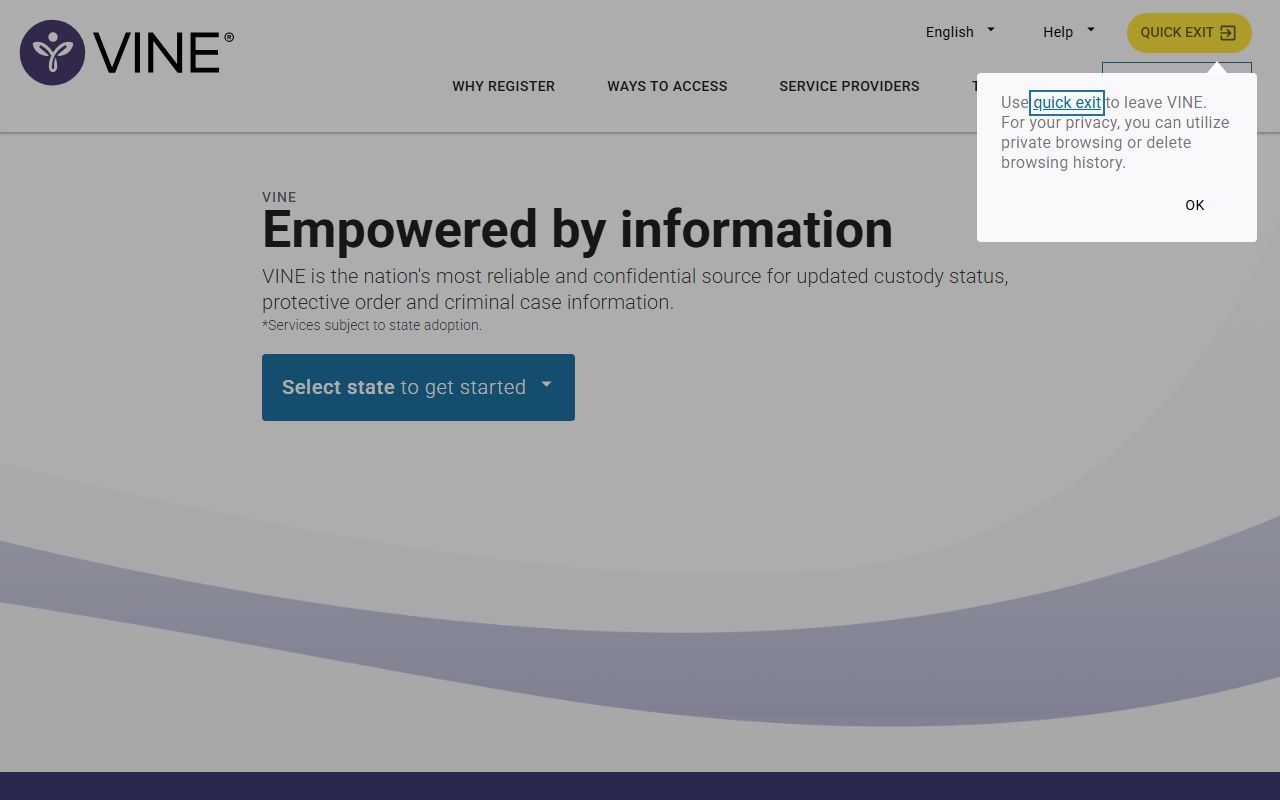
Through VINELink you pick the state, search by offender name or ID, choose the facility or agency, and register for notifications. Fields and coverage vary by jurisdiction, so confirm that Dallas County participation matches what you need.
Searching State Released Inmates Through TDCJ
People sentenced to state prison are tracked by the Texas Department of Criminal Justice, not the county jail. TDCJ inmate information can be found online, by email, or by phone, and includes location, offenses, and a projected release date. The TDCJ inmate page also links parole, reentry, and release processing.
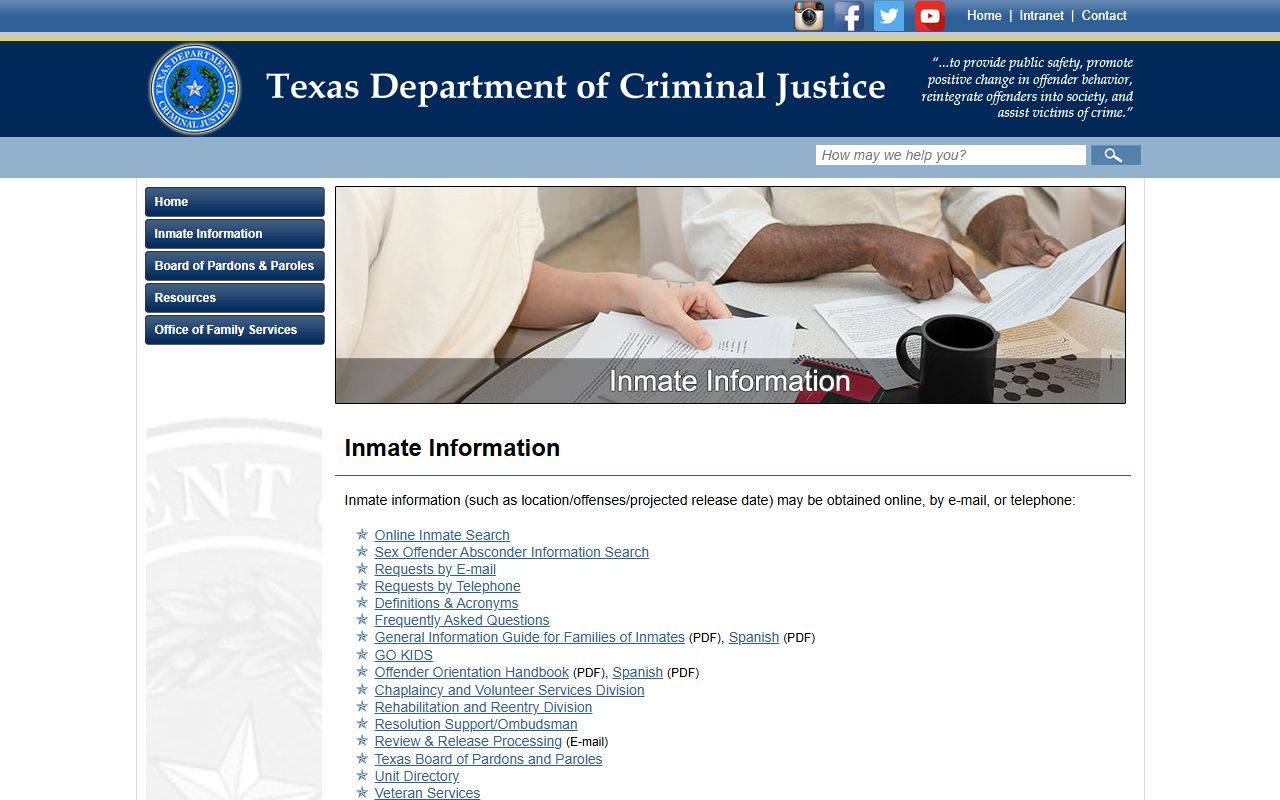
The TDCJ inmate information page is the hub for state custody. The offender search itself uses the fields below.
| Field Label | Type | Required | Notes / Format |
|---|---|---|---|
| Name | Text | One of three | Search by offender name. |
| SID Number | Text | One of three | State identification number. |
| Current TDCJ Number | Text | One of three | Use the portal's option for prior TDCJ numbers. |
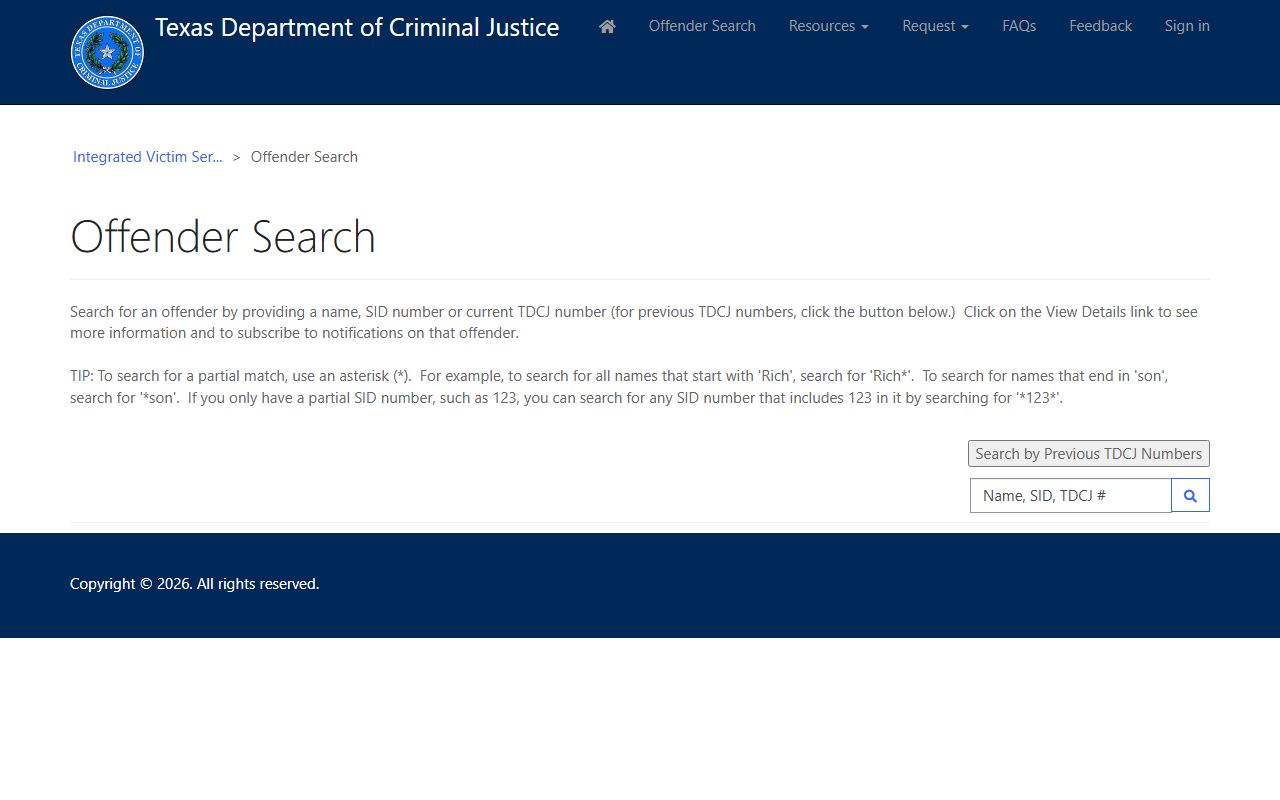
The TDCJ offender search lets you look up a state inmate by name, SID, or TDCJ number.
TDCJ also links a Review and Release Processing function and the Texas Board of Pardons and Paroles, which together handle parole review and release dates. A projected release date is an estimate, not a promise, because good-time credit, program completion, and parole decisions can move it. If a Dallas County felony ended in a prison sentence, the case file shows the sentence while TDCJ tracks the custody and release.
Searching Federal Released Inmates Through the BOP
Federal custody is tracked by the Bureau of Prisons. The BOP inmate locator covers federal inmates from 1982 to the present. If a person shows as released or not in BOP custody, they may still be on supervision or in another system. Release dates can also be recalculated under the First Step Act.
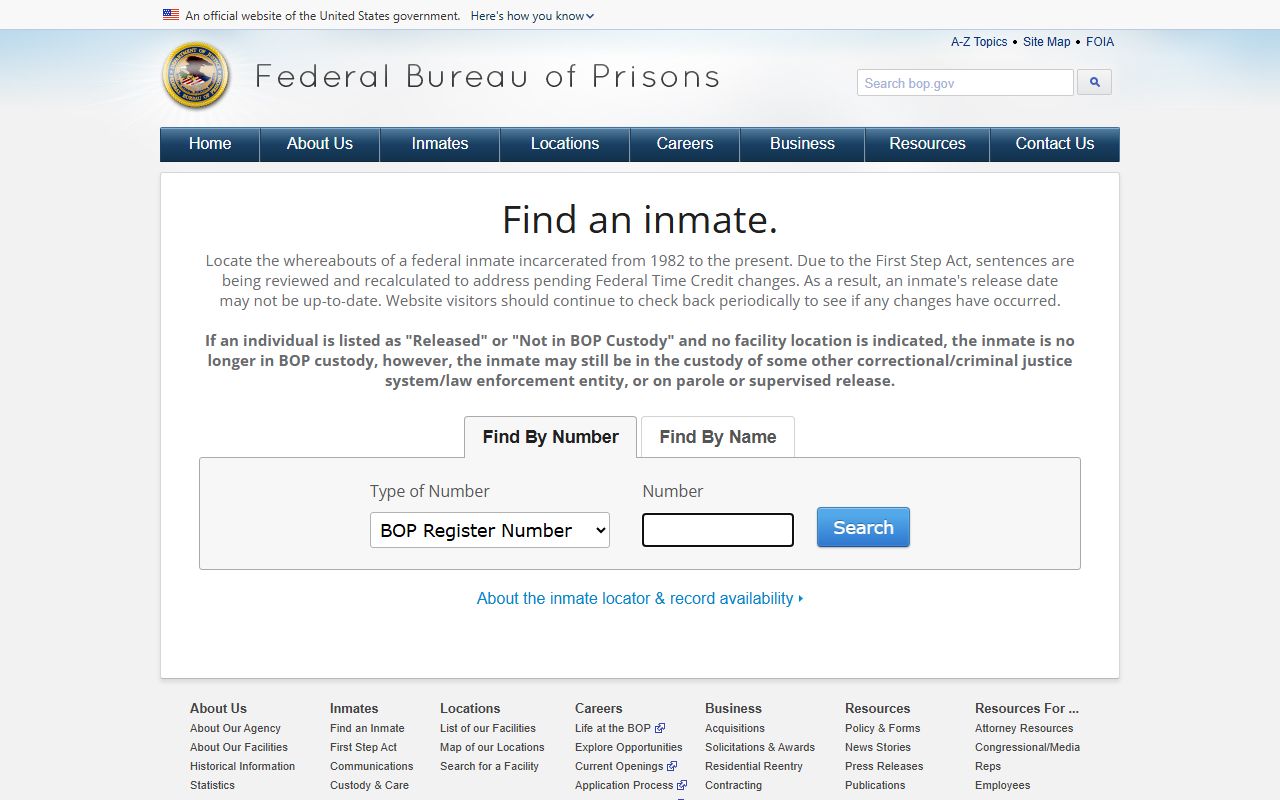
The BOP inmate locator offers two search paths, shown below.
| Search Path | Type | Required | Notes / Format |
|---|---|---|---|
| Find By Number | Tab | One path | BOP Register, DCDC, FBI, or INS number. |
| Find By Name | Tab | One path | First, middle, last name, with race, age, and sex. |
Federal cases from Dallas are filed in the U.S. District Court for the Northern District of Texas, which is where a federal sentence begins.
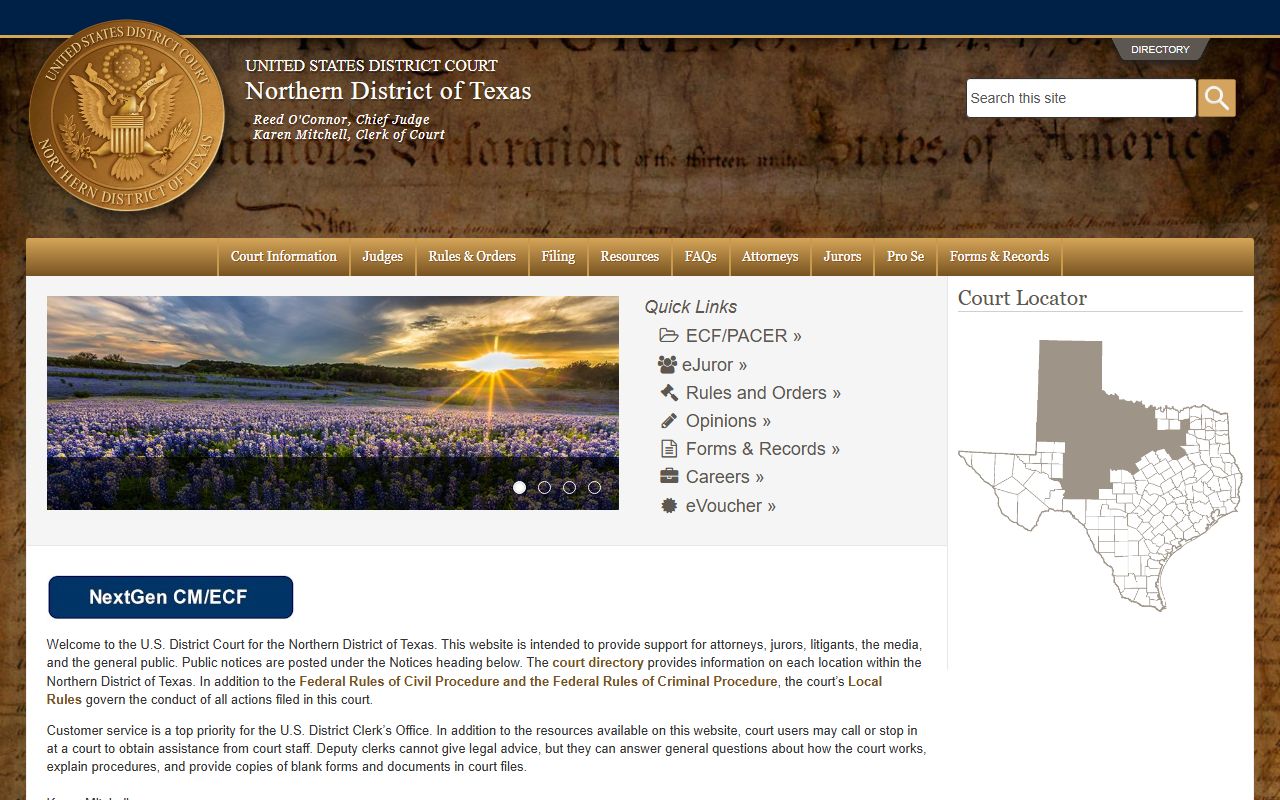
The U.S. District Court for the Northern District of Texas handles federal cases for the Dallas area.
The BOP locator has two cautions worth repeating. First, a status of released or not in custody does not mean the case is closed; the person may be on federal supervision. Second, the First Step Act can recalculate a federal release date, so the locator may update over time. Check back rather than treating one result as final.
Verifying a Dallas County Release in Person or by Phone
When the data is unclear, call. The jail and bond information lines at (214) 761-9025 and (214) 761-9026 can confirm whether a person is still in county custody. A phone check beats guessing, since a release may not post online right away.
Have the full name, the book-in number, and the date of birth ready. If the person bonded out at the Lew Sterrett bond desk, staff can confirm the posting. If they transferred to state or federal custody, the county can point you to the right system to search next.
A phone confirmation also protects against name confusion. Two people can share a name and birth date, and a roster spelling can differ from a court record. By tying the question to a book-in or case number, staff can confirm the exact person and avoid a false match that an online search might produce.
The Texas Sex Offender Registry
The Texas Department of Public Safety runs the statewide sex offender registry, and local law enforcement maintains records for offenders registered with them. The registry is a public-safety tool for tracking certain offenders in the community, not a general inmate locator. Use it to check whether a released person is a registered offender in a given area.
| Field Label | Type | Required | Notes / Format |
|---|---|---|---|
| Name | Text | For name search | Offender first and last name. |
| Address / City | Text | For area search | Search a location or neighborhood. |
| County | Dropdown | No | Limit to Dallas County or another county. |
| Zip / Radius | Text | No | Search within a distance of a ZIP code. |
The DPS sex offender registration program page explains the registry's role and the duties of registered offenders. The registry shows current registration data, not custody. A person can appear on the registry while living in the community under supervision. Treat a registry hit as a public-safety record, and use the county jail lookup or the state and federal locators if your real question is whether the person is in custody.
Parole and Probation Information
Release often comes with supervision. Parole for state inmates is handled by the Texas Board of Pardons and Paroles, while county probation, called community supervision, is run locally. The TDCJ inmate page links parole review, release processing, and reentry resources for families.
Supervision conditions can include reporting, treatment, electronic monitoring, and travel limits. A person on parole or probation who violates a condition can face a new hold or warrant. For warrant checks tied to a supervision issue, see the Dallas County warrant records page.
Dallas County also runs reentry-focused specialty courts, such as the SAFPF reentry court for people returning from substance abuse felony punishment. These programs can shape the supervision plan and the support a person receives. Completion of a specialty court can also affect how a case and its record are resolved over time.
Reentry Resources in Dallas County
Coming home brings legal and practical needs, from ID and housing to family and civil matters. Dallas County's own court resources name several legal-aid groups that help with these issues. The contact cards below list official options.
Legal Aid of Northwest Texas
1515 Main Street
Dallas, TX 75201
(214) 748-1234
Civil legal aid for low-income residents
Disability Rights Texas
1420 Mockingbird Lane, Suite 450
Dallas, TX 75247
(214) 630-0916
Dallas Volunteer Attorney Program
1515 Main Street
Dallas, TX 75201
(214) 243-2236
Pro bono attorney help
The Dallas Bar Association referral service at (214) 220-7400 and the SMU Dedman School of Law clinics are added options. TDCJ also links a Rehabilitation and Reentry Division, a General Information Guide for Families of Inmates, Veteran Services, the GO KIDS program, and an Ombudsman office. These state resources help with the move from custody back to the community, while the local legal-aid groups above handle ID, housing, family, and civil matters.
Civil Rights Restoration After Release
Some rights return after a sentence ends. In Texas, voting rights are generally restored once a person completes the full sentence, including any incarceration, parole, and supervision. Confirm the current rule with the Texas Secretary of State before you register.
Other matters are agency specific. Driver license reinstatement runs through DPS and TxDMV, and benefits eligibility runs through state health agencies. A reentry legal-aid group can help sort which step applies to which right.
Note: Release and supervision data can lag across systems, so confirm a person's status with the holding agency before you rely on any single search.