
How to Search Dallas County Traffic Court Records
Start with the citation itself, since it names the issuing court. If the ticket appears in the county system with a balance or warrant, the Dallas County Wanted search can find it by citation number, case number, name, or license plate. For a city ticket, use the city's municipal court. For a JP citation, use the specific precinct.
The county wanted tool is the main county-level citation and scofflaw lookup. It is free and does not require an account. Match the issuing court to the right system before you pay anything.
- County citation, balance, or scofflaw block: the Dallas County Wanted search.
- City ticket: the Dallas Municipal Court at (214) 670-0109.
- JP citation: the issuing JP precinct at (214) 943-5981.
For warrant detail tied to an unpaid ticket, see the Dallas County warrant records page.
Which Courts Handle Traffic Cases in Dallas County
Traffic cases split by issuing agency. Dallas County justice of the peace courts handle some citations, especially fine-only misdemeanors filed outside city jurisdiction. City municipal courts, such as Dallas Municipal Court, handle citations within city limits. The county wanted system tracks balances and scofflaw blocks across these matters.
The Dallas Municipal Court building is at 106 South Harwood, with citation payments Monday through Friday and limited Saturday hours, and wheelchair access at 2014 Main Street. A citation dispute must go to the municipality or entity that issued it, not the county.
Types of Traffic Cases on Record
Most traffic citations are Class C fine-only misdemeanors. They cover speeding, equipment violations, and similar offenses. More serious matters, like driving while intoxicated, are criminal cases that leave the traffic track entirely.
- Moving violations, such as speeding or running a light.
- Nonmoving and equipment violations.
- Photo or red-light enforcement matters.
- CDL and commercial driver citations.
- DWI and DUI, which route to criminal court.
For the criminal side of DWI, see the Dallas County arrest records page.
What Dallas County Traffic Court Records Show
A court traffic record is the case file held by the court that received the citation. It shows more than a balance. The inventory below lists the fields a traffic court record can contain.
| Field | What It Shows |
|---|---|
| Citation Number | The number on the ticket. |
| Case Number | The court case tied to the citation. |
| Charge / Offense | The violation cited. |
| Issuing Agency | The police or agency that wrote the ticket. |
| Plea and Court Date | The plea entered and the next setting. |
| Disposition | Dismissed, deferred, or convicted. |
| Fine, Fees, Balance | Amounts owed and any warrant or scofflaw flag. |
The county wanted system shows a narrower view focused on balances, warrants, and scofflaw flags. It is a lookup, not the full court file. So a wanted listing may show a balance and a warrant flag without the plea or disposition that the court's own record holds. To read the full case, you usually need the issuing court's system.
Searching by Citation Number Versus by Name
The county wanted search supports several paths. A citation or case number is the most precise, while a name search is broadest. The table below lists the fields.
| Field Label | Type | Required | Notes / Format |
|---|---|---|---|
| Citation Number | Text | For citation search | Up to 20 characters. |
| Case Number | Text | For case search | Up to 20 characters. |
| First / Last Name | Text | For name search | Up to 65 characters each. |
| Zip Code | Text | For ZIP search | Five digits. |
| License Plate or VIN | Text | For vehicle search | Up to 22 characters. |
| Race / Sex / Year of Birth | Dropdown / Text | No | Demographic filters. |
A citation number ties straight to one ticket, so use it when you have it to avoid false name matches.
Paying or Contesting a Dallas County Traffic Ticket
The first step is to find the issuing court, then decide whether to pay, contest, or ask for a program. Paying a fine usually counts as a conviction, so consider a driving safety course or deferred disposition first if you qualify.
- Identify the issuing court from the citation: city, JP, or county listing.
- Check whether the ticket has become a warrant or scofflaw block.
- If eligible, request a driving safety course or deferred disposition before paying as a conviction.
- To contest, contact the court that issued the citation.
- After payment or disposition, allow time for the record to update.
Self-represented filers can use the state Guide & File self-help system for some court forms.
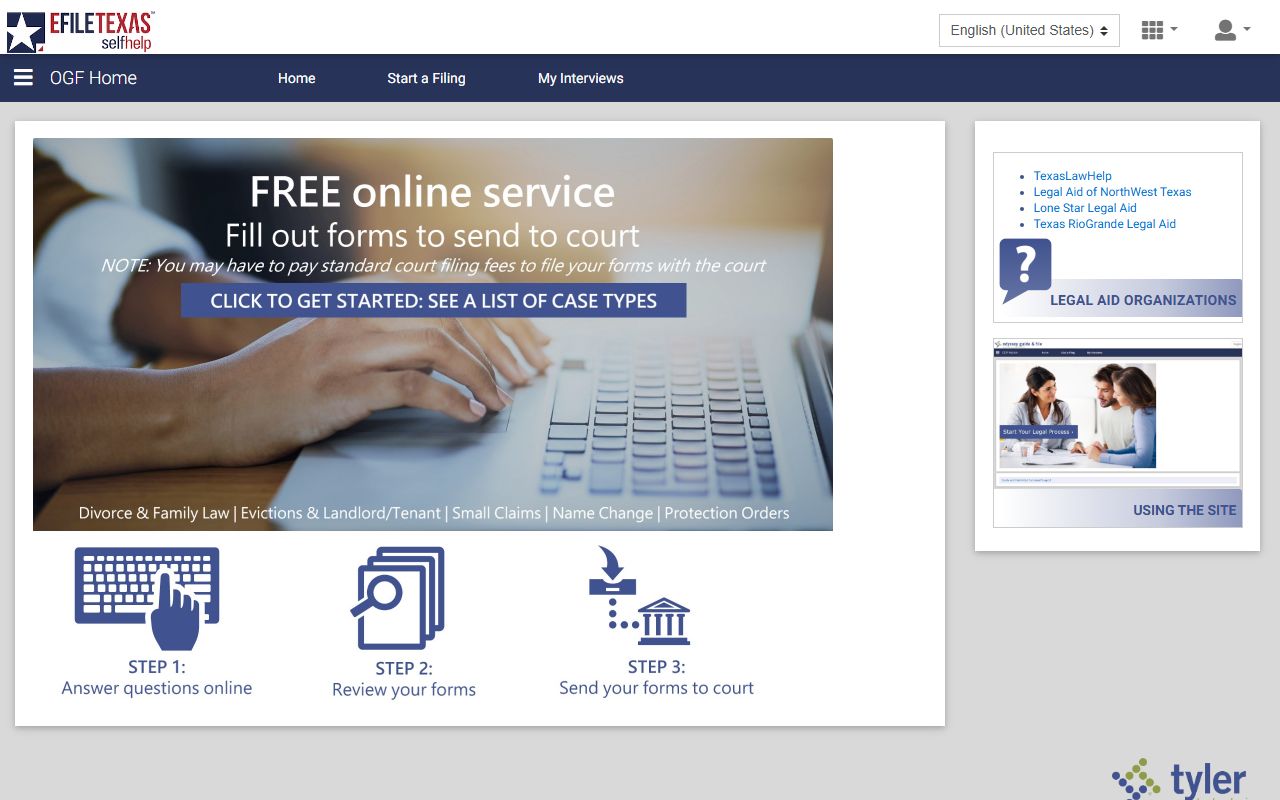
The Texas Guide & File self-help portal walks self-represented filers through guided court forms.
Public Access Laws for Traffic Court Records
Court traffic citations are generally public if they are not sealed. The Texas Public Information Act supports access to government records. Some details are limited, though. Driver license numbers and motor vehicle information can be restricted under Government Code section 552.130, and juvenile traffic matters carry added protection.
So a public traffic record may still have a license number or personal identifier redacted. The case facts, charge, and disposition usually remain open. For the broader framework, see the Dallas County public records page.
Court Traffic Records Versus State Driver Records
This is the distinction that confuses the most people. A court traffic record and a state driver record are different files, held by different agencies. The comparison below sorts them out.
| Feature | Court Traffic Record | State Driver Record |
|---|---|---|
| Held by | The JP or municipal court | Texas DPS |
| What it shows | Citation, charge, plea, disposition, balance | License status, crashes, violations, suspensions |
| Where to access | The issuing court or county wanted search | DPS online or by mail |
| How to correct | Through the court that holds the case | After DPS receives a court correction notice |
A crash report is yet another record, obtained from the Texas Department of Transportation, not the court docket.
State Driver Record Types and Fees
If you need the state driver record, DPS offers several types at set fees. Only one type can be used for a defensive driving course. The table below lists the types and costs.
| Driver Record Type | Fee | What It Contains |
|---|---|---|
| Type 1 Status | $4.00 | License status, home address, original application date. |
| Type 2 3-year history | $6.00 | Type 1 plus moving violations for three years. |
| Type 2A Certified 3-year | $10.00 | Certified Type 2; not for defensive driving. |
| Type 3 All crashes/violations | $7.00 | Type 1 plus all crashes and violations; for the record holder. |
| Type 3A Certified all | $10.00 | Certified Type 3; the only type valid for a defensive driving course. |
| Type AR Certified abstract | $20.00 | Type 3 plus all suspensions; the complete record. |
You order a driver record online or by mail through Texas DPS, not from a court. Once DPS receives a court correction, allow about 21 business days for the record to update.
CDL and Commercial Driver Records
Commercial drivers face stricter rules. A person who held a CDL at the time of the offense, or holds one when requesting a driving safety course, is not eligible for course dismissal, even when driving a personal vehicle. That rule comes from the Dallas Municipal Court driving safety course page.
So a CDL holder usually cannot keep a citation off the record through a safety course the way other drivers can. A commercial driver with a citation should weigh the options carefully and consider legal advice before paying.
DUI and DWI Cases
Driving while intoxicated is not a simple traffic ticket. It is a criminal case that routes to the county criminal courts or, for felonies, the district courts. A DWI generates an arrest record and a criminal court file, not just a citation balance.
Because the stakes are higher, a DWI usually needs legal help. For the arrest and criminal record side, see the Dallas County arrest records page and the court records page.
Deferred Adjudication and Defensive Driving
Two common options can keep a citation off the driving record. A defensive driving course, also called a driving safety course, can lead to dismissal for eligible drivers. Deferred disposition holds the case open for a set period, and if the driver stays out of trouble, the case is dismissed.
The Dallas Municipal Court course page lists requirements, including a notarized affidavit that the driver has not taken a course in the prior 12 months and is not taking one for another citation. State and administrative fees are due at the time of the request. CDL holders are excluded, as noted above.
Sealing or Expunging Traffic Records
Some traffic matters can be limited or removed. A dismissed or deferred case may be eligible for expunction or nondisclosure depending on the outcome and the statute. Juvenile traffic matters carry added confidentiality. Help is available for people who need legal support.

Disability Rights Texas is one of several legal-aid resources in Dallas County for people who need help with court and rights issues. Expunction questions for a conviction belong with an attorney or the court.
Fees for Traffic Record Copies
Fees depend on the record. A county citation balance is whatever the case shows. A state driver record carries the set DPS fees above. A municipal driving safety course adds state and administrative fees due at request.
Note: A court traffic record and a state driver record are different files, so confirm which one you need before you pay for the wrong copy.