
How to File a Dallas County Public Records Request
For county department records, Dallas County uses GovQA, a web-based public records system. You submit a request through the county's Public Records Center, then route it to the right department. A written request is required, and the county must produce public information promptly unless an exception applies.
Use these steps to file a request:
- Open the county open records page and find the Public Records Center.
- Choose "Submit a Request to a Dallas County Department."
- Select the department that holds the record.
- Describe the existing records clearly, with names, dates, and any case or document numbers.
- Submit and keep a copy with proof the county received it.
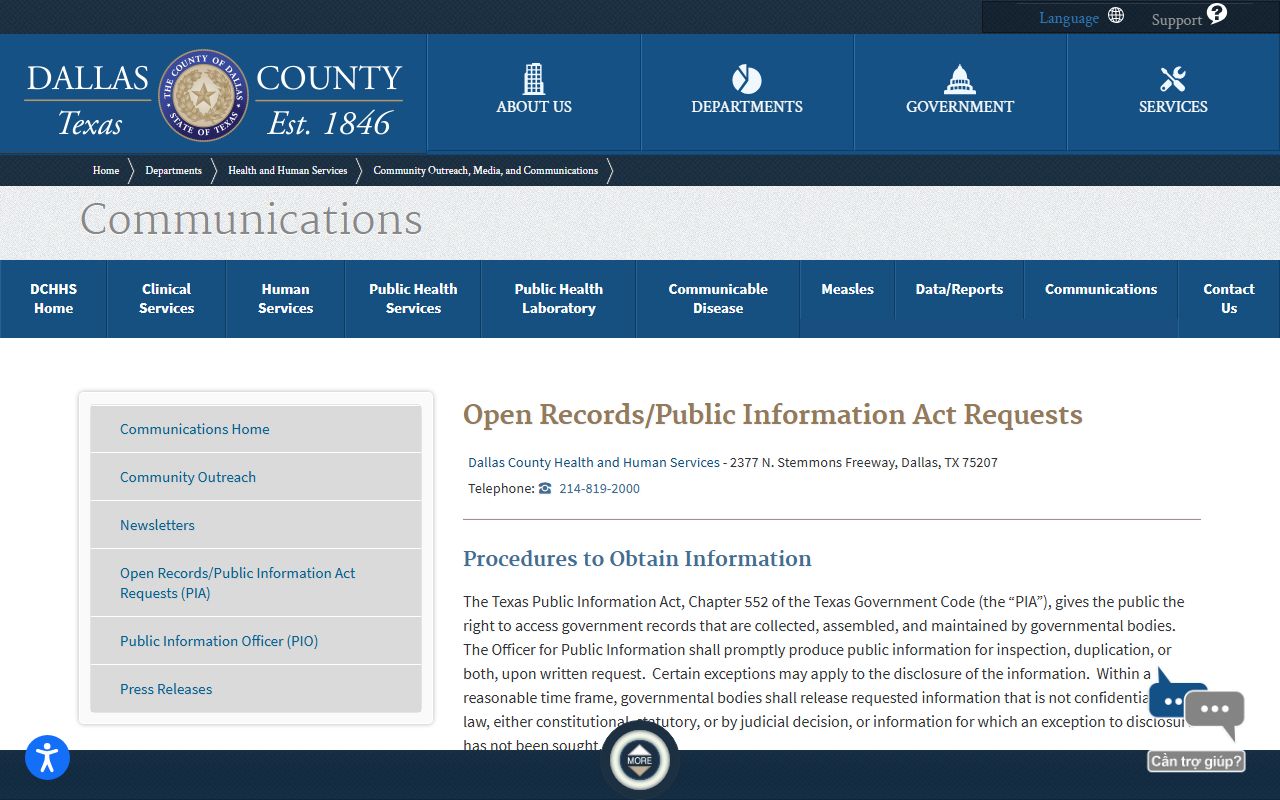
The Dallas County open records page explains the GovQA workflow for department requests.
The Texas Public Information Act
The Texas Public Information Act, in Government Code Chapter 552, is the backbone of public access. It gives the public a right to government records without having to explain why. The policy in section 552.001 says people are entitled to complete information about the affairs of government, unless the law expressly provides otherwise.
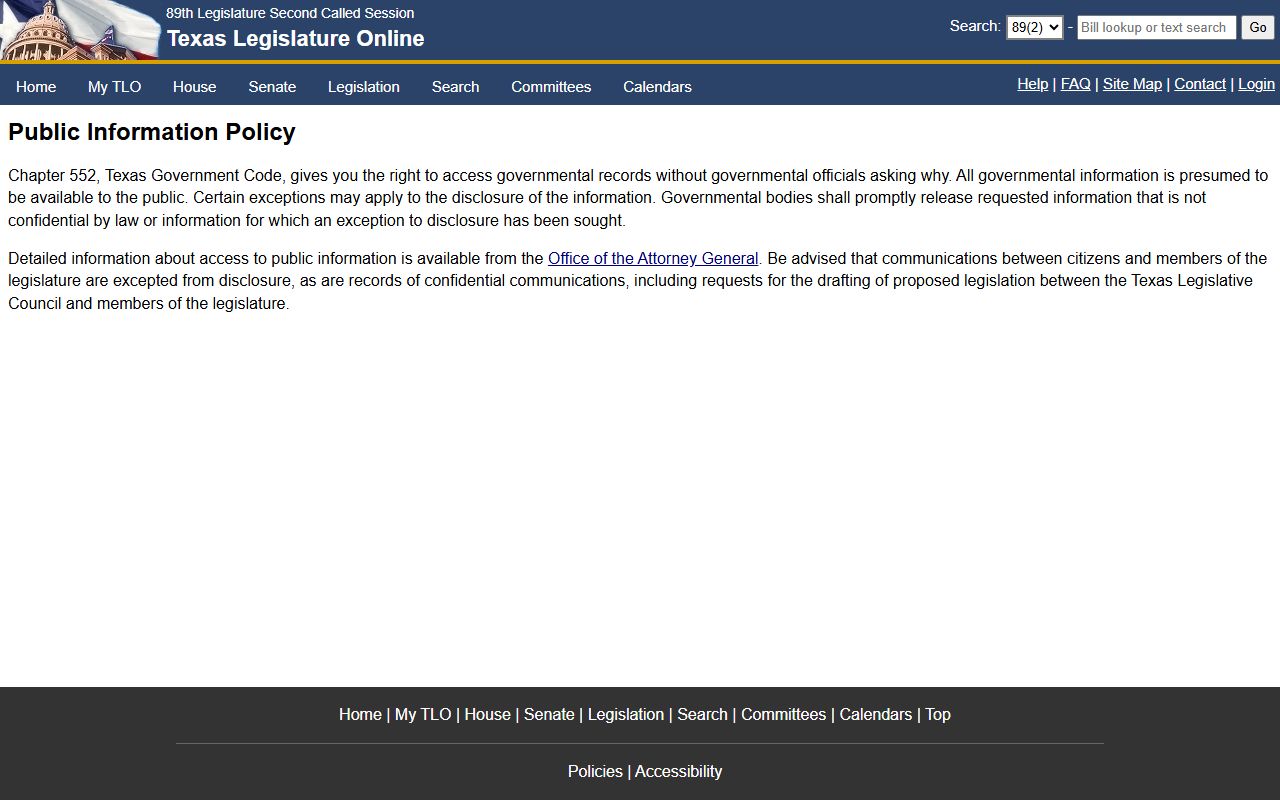
The Texas Legislature public information policy page explains these rights. Since 2019, section 552.234 limits how a request can be delivered: U.S. mail, email, hand delivery, or another method the governmental body approves.
The right of access is not unlimited. Section 552.021 is the operational rule that makes records available, but it works alongside exceptions. Section 552.0035 sets special handling for judiciary information, so court files answer to court rules as well as the PIA. A record can be public in general yet still have parts withheld under another statute, which is why a response sometimes arrives with redactions.
Common Exceptions to Disclosure
Several PIA exceptions come up often with county records. Knowing them helps you understand why parts of a response may be held back.
- Section 552.101 protects information made confidential by other law, such as juvenile, mental health, and adoption records.
- Section 552.108 can protect active law enforcement and prosecution information.
- Sections 552.117 and 552.147 support redaction of certain personal information and Social Security numbers.
- Section 552.130 protects motor vehicle and driver information.
- Section 552.141 protects certain marriage license application information.
These exceptions are why a public file can still be partly redacted. The office releases what it can and withholds only what the law allows.
What the County Clerk Maintains
The County Clerk holds the county's official public records, which reach well beyond courts. The office records real property documents, assumed names, marks and brands, commissioners court minutes, and foreclosures. It also keeps vital records and has digitized real estate records from 1846 to the present.
- Real property records, such as deeds and liens.
- Assumed name, or "doing business as," filings.
- Marriage records and other vital records.
- Commissioners court minutes and foreclosure notices.
These are searched in the County Clerk's official records portal. For office detail, see the Dallas County County Clerk page. The office also runs property fraud and identity-theft alert programs tied to the recording system, which let owners watch for suspicious filings against their property. The deep digitized record span back to 1846 makes the county's official records one of the strongest local sources for historical property research.
Court Records Versus County Department Records
The route depends on the record type. A filed court document goes through the clerk or the court portal. A department document, like a policy or a budget, goes through the PIA and GovQA. The comparison below sorts them out.
| Feature | Court Record | Department Record |
|---|---|---|
| Examples | Filings, dockets, judgments | Policies, budgets, audits, emails |
| Where to ask | District Clerk, County Clerk, court portal | GovQA Public Records Center |
| Governing rules | Court access rules and statutes | Texas Public Information Act |
| Custom answers | Not created on request | Not created on request |
The PIA does not require a county office to answer questions or create new records, only to release existing ones. For filed cases, the Dallas County court records page covers the portals.
What to Include in a Public Records Request
A clear request gets a faster answer. The Texas Attorney General guide lists what a strong request needs. The table below maps the elements to include.
| Request Element | Detail |
|---|---|
| In writing | Send to the body that holds the record. |
| Existing records | Ask for records that already exist, not answers to questions. |
| Identifiers | Case, citation, or document numbers, names, and date ranges. |
| Format | Ask for electronic copies where possible. |
| Certified? | State whether you need certified copies. |
| Proof of receipt | Keep a copy and confirmation the body received it. |
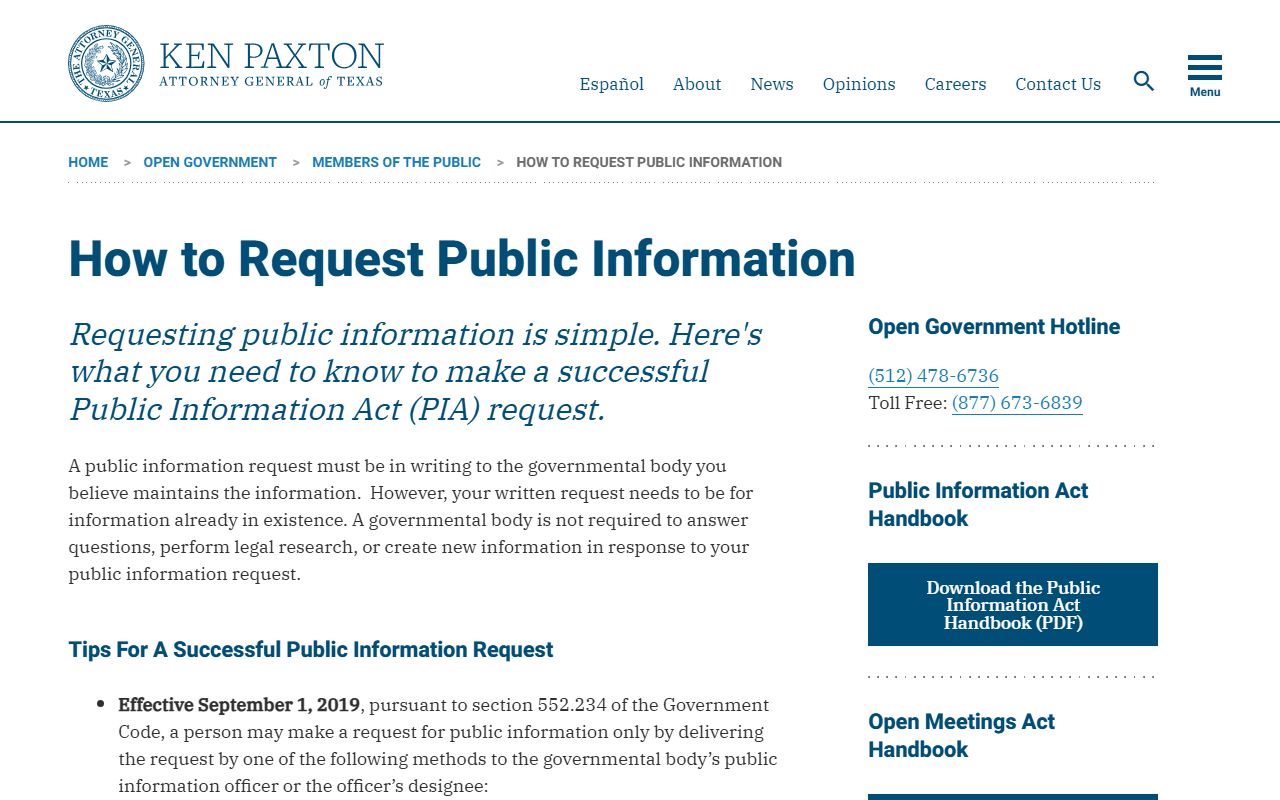
The Texas Attorney General guide explains approved methods and the existing-record rule. The Open Government hotline numbers are (512) 478-6736 and toll-free (877) 673-6839.
A few habits make requests work better. Check the agency website first, since many records are already posted. Separate a records request from a customer-service question, because the PIA covers records, not answers. Avoid asking the office to do legal research or build a new report. For sensitive or restricted records, expect a request for identification, a possible Attorney General ruling, or instructions to obtain a court order. Bulk county clerk data requests may be routed for review under county policy.
The Open Records Ruling Process
Sometimes a county office believes a record may be withheld. If no prior determination applies, the office can ask the Attorney General's Open Records Division for a ruling. The Open Records Division issues more than half of its rulings within 20 business days, but has up to 45 business days after receiving the request for a ruling.
The Texas Attorney General ruling page explains what happens after a ruling. A ruling is limited to the facts at issue, so it is not a blanket determination for other records unless it says so. If a county office wants to challenge a ruling, it must file suit in Travis County within 30 calendar days, and within 10 calendar days to get the full benefit of the challenge. If it neither sues nor complies, the requestor and the Attorney General may seek enforcement.
Fees for Dallas County Public Records
Fees depend on the office and the record. PIA copy charges follow state cost rules and any itemized estimate the office gives. The County Clerk sets fixed fees for some records, shown below.
| Item | Amount |
|---|---|
| Misdemeanor background search | $5.00 |
| Marriage license search / certified copy | $10.00 |
| Birth certificate search / certified copy | $23.00 |
| Death certificate, first copy | $21.00 |
| PIA department copies | Per state cost rules and itemized estimate |
Court copy fees from the District Clerk are quoted by staff before payment, based on document length and search time. The County Clerk also sells electronic certified records online, available around the clock, which can save a trip when you need a verified copy. Whichever office you use, ask for the exact cost up front, since copy charges and any search or retrieval fee can vary by the size and type of the record.
Sealing, Expunction, and Restricted Records
Open access has limits. Confidential records are withheld under Government Code section 552.101, which pulls in other confidentiality laws. Criminal records can be removed by expunction or limited by an order of nondisclosure. A civil court record can be sealed under court rule.
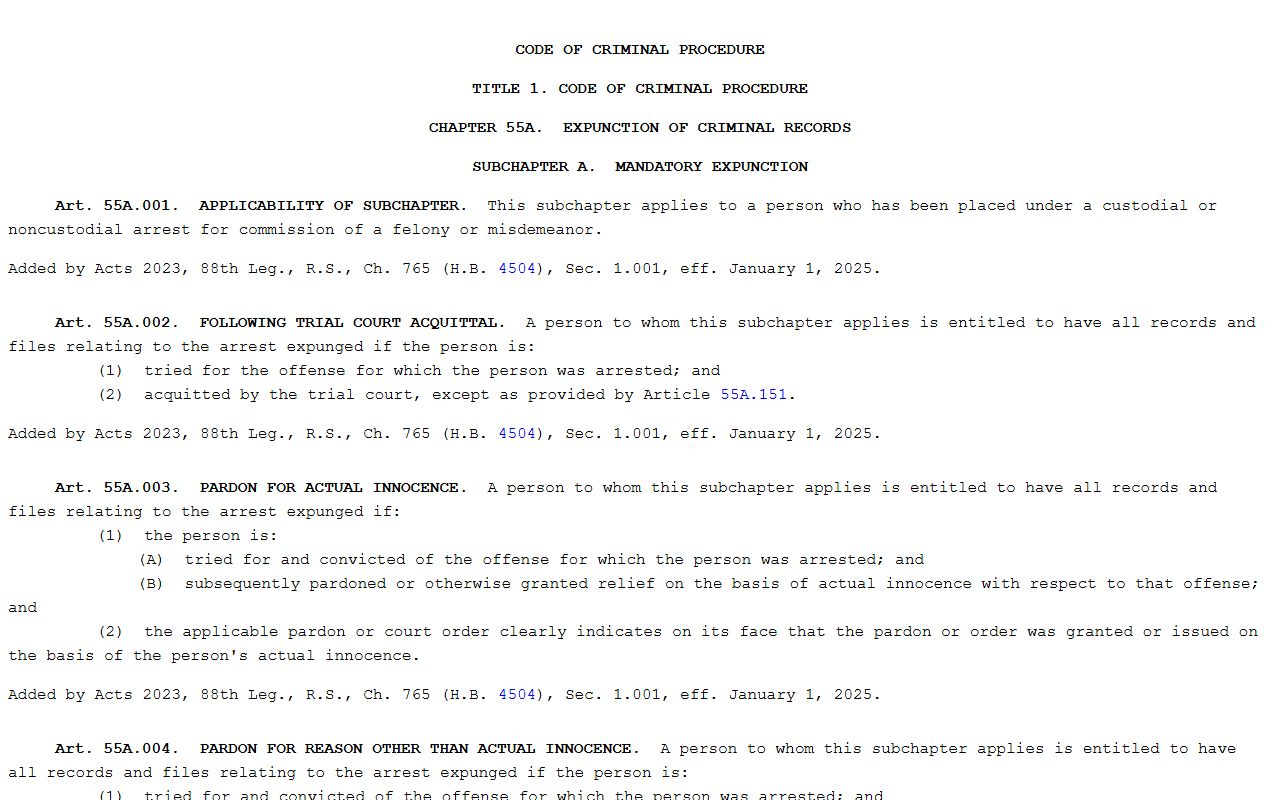
Under Texas Code of Criminal Procedure Chapter 55A, eligible criminal records can be expunged. Sensitive identifiers, like Social Security numbers, can also be redacted on request.
Note: A record can be public overall yet still have parts redacted under a confidentiality statute, so expect some details to be withheld.